Unveiling the Horrors and Wonders of Middle-earth in Season 3
Get ready, fans of Middle-earth! Season 3 of The Rings of Power is set to deliver an even more immersive and intense experience, especially when it comes to the creatures that inhabit its rich, dark world. From the meticulously crafted prosthetics of the Orcs to the terrifying roar of the Balrog, this season promises to bring these fantastical beings to life in unprecedented ways. The creators have poured their hearts and souls into making this season truly special, focusing on depth, nuance, and a seamless blend of practical effects and cutting-edge visual effects.
Barrie Gower, the esteemed Prosthetics Designer, highlights that this season is precisely what fans have been eagerly anticipating. It’s described as very powerful and dark, featuring a diverse array of various creatures that have been painstakingly brought to fruition. The intensity of these creations is palpable, promising a truly captivating journey into the heart of Middle-earth’s darker elements.
Bringing Creatures to Life: A Symphony of Art and Technology
The Balrog: A New Dimension of Terror
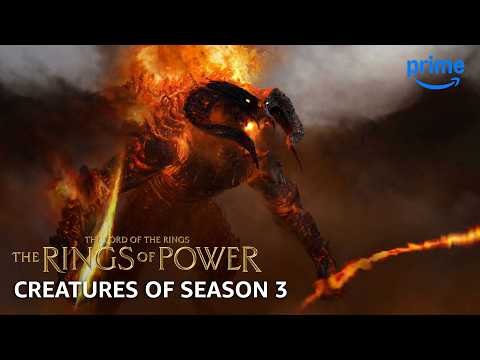
One of the most exciting revelations for Season 3 is the Balrog. Jason Smith, a VFX Supervisor, explains that viewers will witness the Balrog take on a rooted, nuanced, and layered look. While the fiery essence of the Balrog has been seen before, this season delves into what it looks like when it’s smoldering, adding a new layer of terrifying detail to this iconic creature. For fans of Tolkien, seeing such a creature brought to life on screen in this manner is nothing short of amazing.
But perhaps the most surprising and thrilling aspect of the Balrog this season is its voice. Patrick McKay and J.D. Payne, the showrunners, confirm that the Balrog will have dialogue. This alone was a massive undertaking, pushing the boundaries of what viewers expect from this formidable foe. The casting of Simon Pegg as the voice of the Balrog is a testament to the show’s commitment to bringing these characters to life with depth and resonance. Simon Pegg recalls his father reading The Hobbit to him, doing all the voices, making this role a significant and personal one for him. Charlie Vickers, who plays Sauron, notes that Simon Pegg’s child even has a little Balrog toy, showing the character’s impact and making Pegg’s involvement even more thrilling. Playing such a pivotal character, especially with dialogue, was an incredibly exciting prospect for Pegg.
Orcs: More Dialogue, More Detail
Morfydd Clark, who portrays Galadriel, praises the incredible prosthetics team for creating the most amazing monsters. Season 3 marks a significant shift for the Orcs, as Barrie Gower points out, describing it as a “different beast” for the team. This season features a lot more dialogue for the Orcs, and several “hero Orcs” have been introduced, implying more prominent roles and detailed characterizations for these creatures.
The intricate process of transforming actors into Orcs is highlighted, showcasing the meticulous work of the prosthetics team. From applying detailed facial features to crafting their unique armor, every aspect is designed to immerse the audience in their world. The collaboration between the prosthetics team and the actors, even during mundane moments like lunch breaks, underscores the dedication to their craft.
Mumakil and Felbeasts: Grandeur and Movement
The scale of Middle-earth’s creatures is not limited to the Balrog and Orcs. Daniel Weyman, who plays Gandalf, describes being taken across the desert on a giant Mumakil, complete with war armor. This emphasizes the grandeur and epic scope of the creatures featured in Season 3. The practical aspects of filming these scenes are also shown, with Weyman interacting with large, intricate props on set, showcasing the blend of physical and digital effects.
Jason Smith also touches upon the Felbeasts, drawing a connection to Tolkien’s potential reference to a pterodactyl. He emphasizes the importance of their movement – how they flap, rise, and fall – to accurately portray these creatures. This attention to detail in their locomotion adds to their realism and impact on screen. The collaboration between Barrie Gower’s prosthetics team and the visual effects team is crucial, with a seamless blend of different techniques coming together to create these fantastical beings.
The Magic Behind the Scenes: Collaboration and Innovation
The creation of these creatures is a collaborative effort between various departments. Barrie Gower notes the close working relationship with the VFX team, emphasizing that throughout Season 3, many elements required a hand-in-hand approach. This seamless blend ensures that the creatures, whether brought to life through prosthetics or visual effects, feel cohesive and real within the world of Middle-earth.
Daniel Weyman further elaborates on the magic created by Jason Smith and his team, stating that very little of what he does isn’t massively enhanced by their work. This highlights the indispensable role of visual effects in bringing the more fantastical elements, such as magic and large-scale creatures, to life. Lindsay Weber, a producer, aptly summarizes that all these efforts truly bring these creatures to life, adding to the magic and giving viewers the feeling of truly being in Middle-earth.
Conclusion
Season 3 of The Rings of Power is poised to be an extraordinary visual and narrative experience, largely thanks to the incredible dedication to its creatures. From the nuanced design of the Balrog and its surprising new voice to the detailed prosthetics of the Orcs and the majestic presence of the Mumakil, every creature is crafted with immense care. The collaborative spirit between prosthetics, visual effects, and acting departments ensures a seamless and immersive journey into the depths of Middle-earth, promising fans a season that truly delivers on its epic scope and dark intensity.
Key Takeaways
- Season 3 of The Rings of Power will feature powerful and dark creatures, fulfilling long-awaited fan expectations.
- The Balrog will receive a new, layered look, with a focus on its ‘smoldering’ appearance, and will notably have dialogue.
- Simon Pegg has been cast as the voice of the Balrog, a role that holds personal significance for him.
- Orcs in Season 3 will have more dialogue and feature several ‘hero Orcs,’ indicating more prominent roles and detailed prosthetics.
- The creation of creatures like the Mumakil and Felbeasts involves a seamless blend of practical prosthetics and advanced visual effects.
- Extensive collaboration between prosthetics, VFX, and actors is key to bringing Middle-earth’s creatures to life and enhancing the show’s magic.
Frequently Asked Questions
What can fans expect from the creatures in Rings of Power Season 3?
Fans can expect a powerful and dark season with various intense and meticulously created creatures, fulfilling what they’ve been waiting for.
Will the Balrog have a new look in Season 3?
Yes, the Balrog will feature a rooted, nuanced, and layered look, exploring what it appears like when it’s ‘smoldering’.
Who is the voice actor for the Balrog in Season 3?
Simon Pegg has been cast as the voice of the Balrog, a role he found exciting due to his childhood connection with Tolkien’s stories.
Will Orcs have more dialogue in Season 3 of The Rings of Power?
Yes, Season 3 will feature a lot more dialogue for Orcs, including the introduction of several ‘hero Orcs’.
How are the creatures brought to life in The Rings of Power?
Creatures are brought to life through a seamless blend of practical prosthetics, led by Barrie Gower, and advanced visual effects, supervised by Jason Smith, with close collaboration between the teams.
What other creatures are highlighted in Season 3?
Besides the Balrog and Orcs, creatures like the giant Mumakil with war armor and Felbeasts (referenced similarly to pterodactyls) are also featured, with great attention to their movement and design.